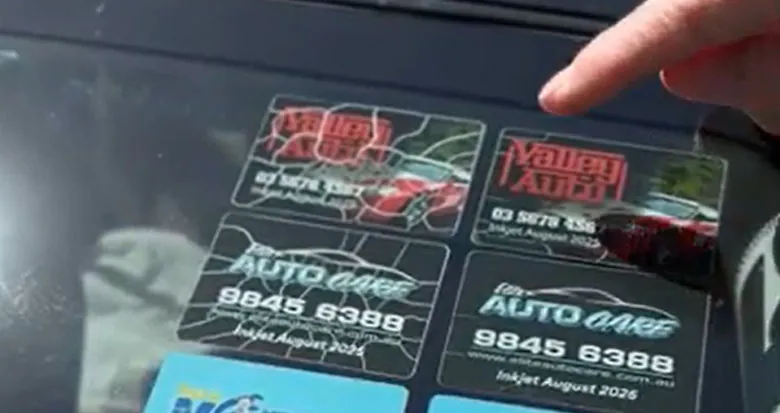
When we say no label leaves our premises without passing the Guru test – “it has to be the best”, we’re not talking about how a label looks on day one.
Day one is easy.
What matters is how that label performs over time – through handling, environmental exposure, storage, use, and the conditions it was actually designed for.
That’s what the Guru Test is built to assess.
It Starts With Purpose, Not Materials
Before anything is printed, the process starts with understanding intent.
We ask:
- Where will this label live?
- What conditions will it be exposed to?
- How long does it need to perform?
- What happens if it fails early?
Those answers define what “the best” means in context.
A label designed to last weeks has different requirements to one designed to last years.
The Guru Test isn’t about over-engineering – it’s about matching performance to purpose.
Real Jobs, Real Conditions
Testing doesn’t happen on theoretical samples.
We run real production jobs, using real artwork, real substrates, real adhesives, and real print processes.
Labels are applied in real environments and left in place for extended periods, often up to 12 months, to capture:
- Seasonal changes
- Temperature fluctuations
- UV exposure
- Moisture, handling, and normal wear
Time is a critical part of the process.
Many failures don’t appear immediately — they show up after repeated stress.
Observing Performance Over Time
Throughout the testing period, performance is monitored.
We’re looking for:
- Adhesion integrity
- Readability
- Colour stability
- Material behaviour at edges and stress points
If a label curls, peels, cracks, fades, or degrades at any point, it doesn’t pass.
Using Failure to Refine the Standard
Failure during testing isn’t a setback — it’s information.
Each failure points to something specific:
- A material limit
- An adhesive mismatch
- An environmental stress that wasn’t fully accounted for
Restraint Is Built Into the Process
One of the hardest parts of ensuring long-term quality is knowing when not to proceed.
Just because a label looks good initially doesn’t mean it’s ready.
Just because it meets a specification doesn’t mean it will perform over time.
Sometimes the best decision is to test longer, adjust the approach, or hold something back.
That restraint is part of the standard.
Why This Matters
A label’s job isn’t to look good briefly.
It’s to perform reliably for as long as it’s meant to — no more, no less.
The Guru Test exists to make sure we can stand behind that outcome honestly. So when we say:
“No label leaves our premises without passing the Guru Test.
It has to be the best.”
What we mean is:
We’ve considered its purpose, tested it in real conditions, observed its performance over time, and made sure it does its job properly for its entire intended lifespan.
Watch the testing phase in action….don’t worry we’ve condensed a year into 30 seconds.